Halloween events in Louisville KY run the full month of October, and the city takes the season seriously. Between gas-lit Victorian streets, century-old ghost stories, and a full calendar of fall festivals, spooky season here offers everything from family pumpkin trails to after-dark walks through a neighborhood David Dominé’s books have dubbed America’s Most Haunted Neighborhood. Here are the events and experiences worth planning around this year, starting in the heart of Old Louisville.
1. The Widmer House: Where America's Most Haunted Neighborhood Began

When writer and Louisville Historic Tours founder David Dominé moved into the historic Widmer House in 1999, he had little idea that his new home would change the direction of his writing career. The previous owner had warned him about a mischievous resident poltergeist named Lucy, but Dominé was skeptical. Then came the unexplained footsteps and peculiar odors that prompted him to ask neighbors about their own experiences. Practically everyone seemed to know of another supposedly haunted house.
Dominé was equally astonished that such an architecturally spectacular neighborhood wasn’t receiving greater recognition as a heritage-tourism destination. He began researching its history and collecting its ghostly legends, discovering that he could scarcely walk half a block without encountering another building associated with an apparition or unsettling tale. He decided to bring these stories together in a book, using the neighborhood’s supernatural reputation to introduce readers to its remarkable architecture and fascinating past.
The result was Ghosts of Old Louisville, published in 2005. Many of the stories collected were previously unknown, and in researching and publishing them, he helped bring a largely overlooked body of local folklore to a wider audience.
Around this time, Dominé coined the nickname America’s Most Haunted Neighborhood. Other places around the country touted themselves as the most haunted town, city, or building, but no other neighborhood was making that particular claim. Given the remarkable concentration of reported hauntings in Old Louisville, he believed the title was justified.
The nickname was also a means to a larger end. By cultivating the neighborhood’s ghostly reputation, Dominé hoped to encourage visitors to appreciate its history, architecture and preservation. His philosophy was simple: “You don’t need to believe in ghosts to enjoy a good ghost story.”
Readers evidently agreed. They wanted more, prompting Dominé to publish Phantoms of Old Louisville in 2006 and Haunts of Old Louisville in 2009. In 2014, he compiled, edited and updated the stories from all three books into True Ghost Stories and Eerie Legends from America’s Most Haunted Neighborhood, a best-of collection that continues to introduce readers to Old Louisville’s supernatural folklore.
Many of these stories have been featured in television productions, including KET’s Emmy-winning Kentucky Life episode, David Domine; Old Louisville’s Haunted Places.
2. Conrad's Castle: A Victorian Masterpiece with Ghostly Residents

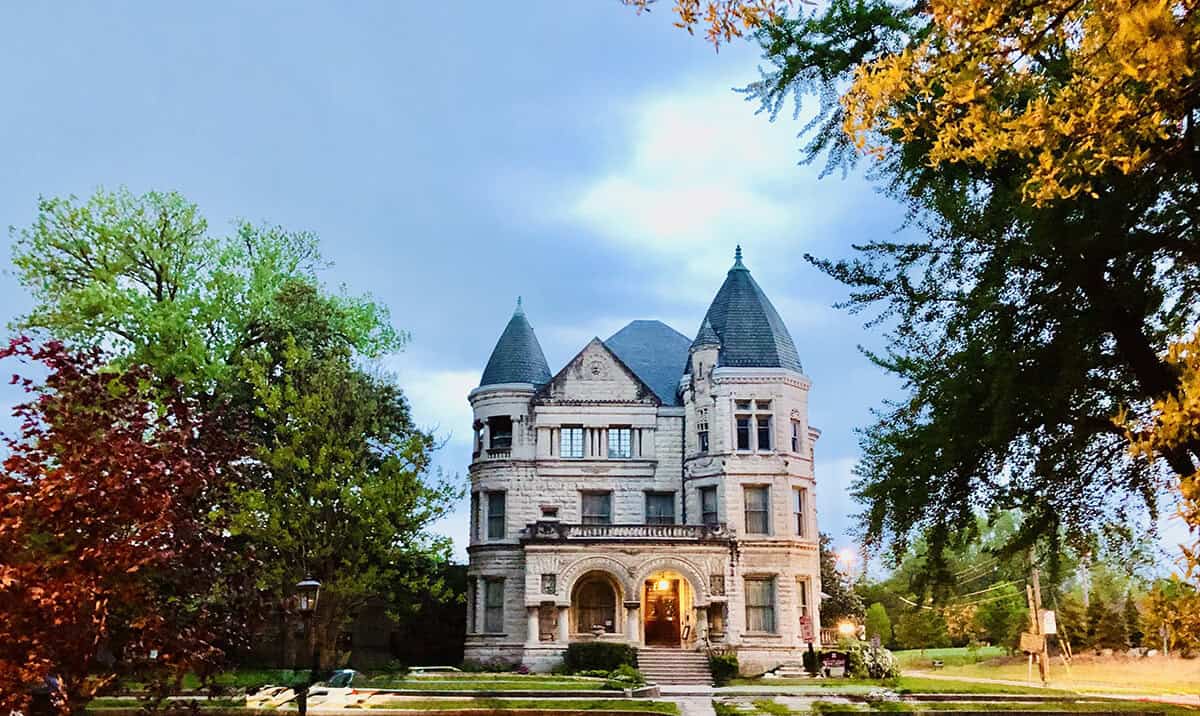
If any building looks as though it belongs in a ghost story, it’s the Conrad-Caldwell House. Completed in 1895 and designed by prominent Louisville architect Arthur Loomis, this imposing Richardsonian Romanesque mansion dominates one end of St. James Court. Known affectionately as Conrad’s Castle, it boasts massive Bedford limestone walls, elaborate stone carvings, decorative gargoyles, sweeping archways and dramatic conical towers. Its richly appointed interior features magnificent woodwork, parquet floors and stained-glass windows.
Over the years, reports of unexplained activity have given Conrad’s Castle a reputation as one of Old Louisville’s haunted landmarks. Among the entities said to inhabit the house is the spirit of its original owner, Theophile Conrad, remembered in local lore as a rather cantankerous resident who supposedly continues to keep an eye on his former home. Other accounts describe mysterious sounds and unexplained occurrences within the mansion.
Whether one believes these stories or not, the Conrad-Caldwell House provides a fascinating glimpse into the lives of the wealthy families who helped shape Old Louisville. Its architecture, furnishings and history make it an essential stop for anyone interested in the neighborhood’s Victorian heritage.
Visitors can explore the mansion for themselves at the Conrad-Caldwell House Museum, located at 1402 St. James Court. The museum offers guided and self-guided tours, as well as special events throughout the year.
3. The Venus Fountain: A Beautiful Landmark and a Tragic Little Ghost

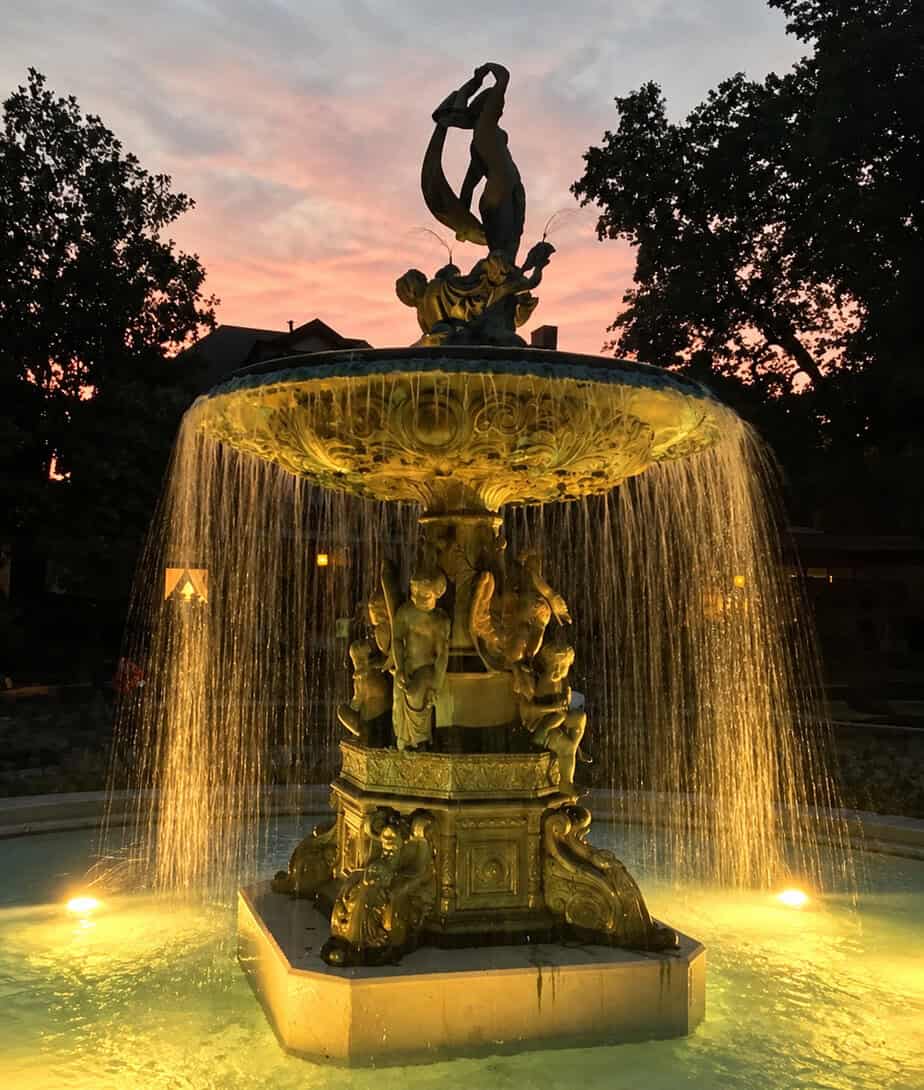
At the center of Old Louisville’s leafy St. James Court stands one of the neighborhood’s most recognizable landmarks: the magnificent Venus Fountain. Installed in the 1890s, its graceful sculpture depicts Venus rising from the sea, surrounded by cascading water and the elegant Victorian residences that define this historic residential enclave. The fountain has become a beloved symbol of Old Louisville—and, appropriately enough, of America’s Most Haunted Neighborhood.
But according to local legend, the fountain is also associated with one of the neighborhood’s most poignant apparitions: the Ice Boy.
The story centers on a young grocery delivery boy who reportedly perished during a devastating fire at the nearby St. James Court Flats in February 1912. According to the traditional account, the child had entered the building to warm himself on a bitterly cold winter evening when the fire broke out. Trapped on an upper floor, he was unable to escape.
The boy’s ghost is said to appear around the fountain during the coldest months of the year, particularly when snow or ice covers the ground. Witnesses have described a forlorn little figure dressed in ragged clothing, sometimes with soot and ash on his face, who vanishes as mysteriously as he appears.
The tale has become one of Old Louisville’s best-known ghost stories, and a favorite on the annual Victorian Ghost Walk, but it also touches on a less romantic aspect of the Gilded Age: the stark differences between the wealthy families who occupied St. James Court’s grand mansions and the working-class residents of nearby neighborhoods. The legend holds that the boy’s death received little attention because he came from a poor family.
The Ice Boy’s story has been featured in local television productions, including Kentucky Educational Television’s Inside Louisville, which explored Old Louisville’s haunted history with David Dominé.
4. Belgravia Court: Gaslights, Ghosts, the Pink Palace

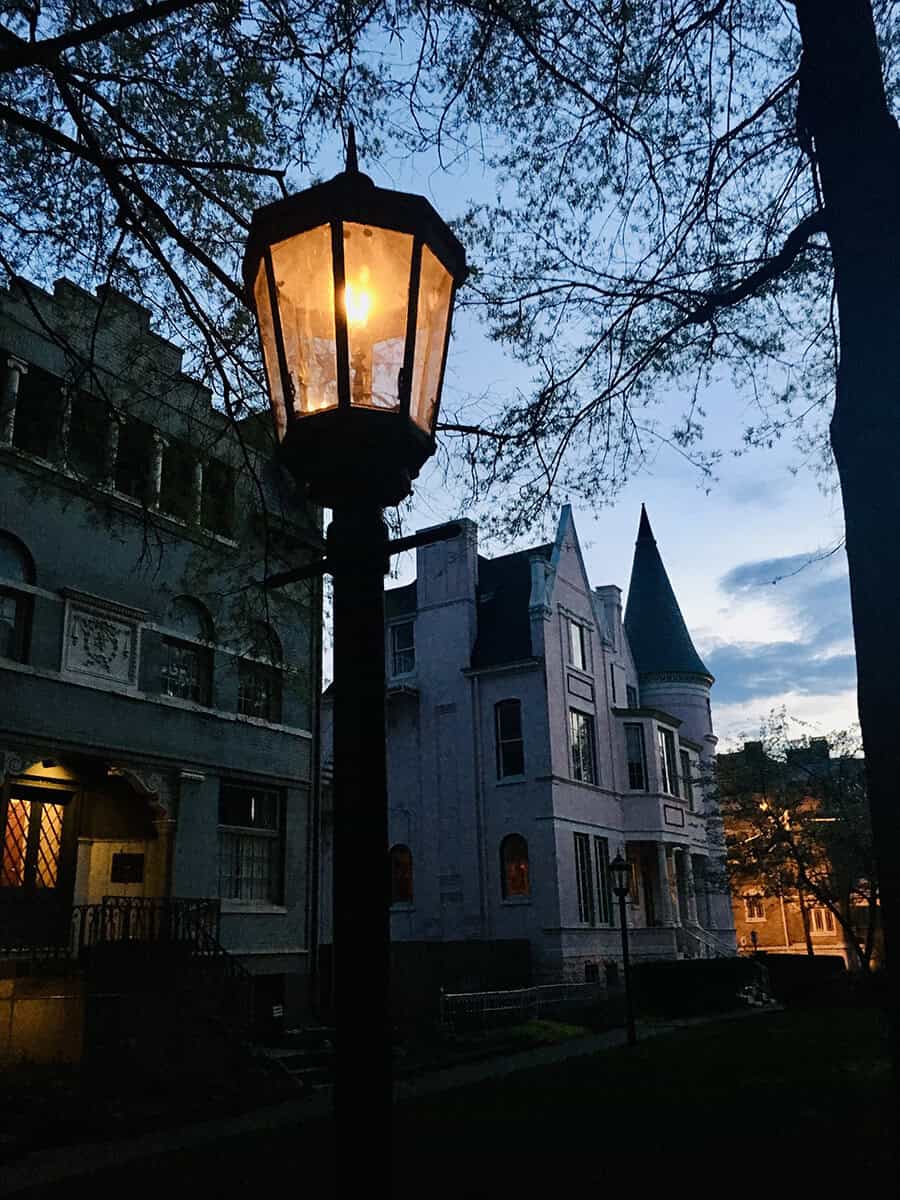
Few things evoke the atmosphere of Victorian Louisville quite like the warm glow of a gas streetlamp. Along Belgravia Court, one of Old Louisville’s most charming pedestrian thoroughfares, traditional gas lighting casts flickering pools of light across brick façades and wrought-iron fences. After sunset, the court takes on an atmosphere that seems almost deliberately designed for telling ghost stories.
Belgravia Court is part of the remarkable residential enclave surrounding St. James Court, an area developed following the Southern Exposition of the 1880s. With its pedestrian-friendly design and picturesque Victorian architecture, it remains one of the neighborhood’s most distinctive places to explore.
Nearby stands another celebrated Old Louisville landmark: the famously colorful—and reportedly haunted—Pink Palace. Originally constructed around 1890, the building eventually acquired its distinctive pink exterior and became associated with a variety of colorful neighborhood stories. Among its supernatural legends is the tale of Mr. Avery, a kindly spirit said to watch over the house.
Together, Belgravia Court and the Pink Palace capture much of what makes Old Louisville such an appealing destination for ghost-story enthusiasts. The architecture provides the atmosphere, the gaslights set the mood, and the stories supply just enough mystery to make visitors wonder what might be lurking beyond the next corner.
5. Towers, Turrets, and the Architecture of the Supernatural

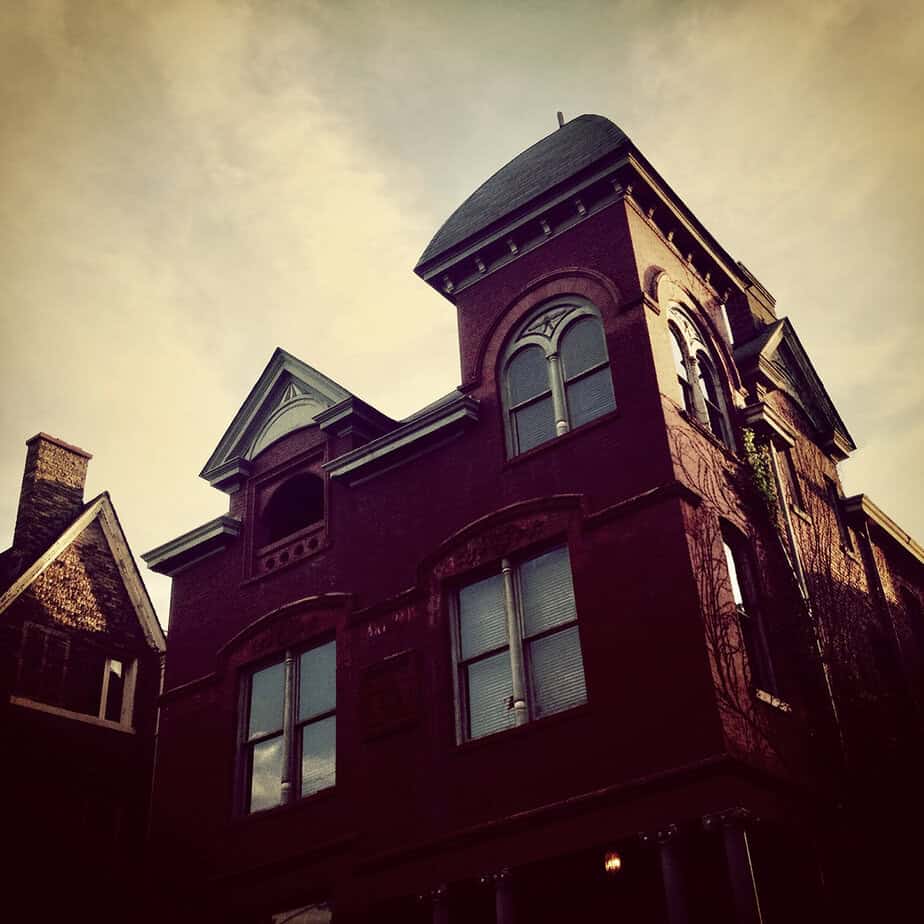
Even without a single ghost story, Old Louisville would be a wonderfully atmospheric place to explore after dark. Much of its architecture dates from the late nineteenth and early twentieth centuries, when wealthy residents commissioned elaborate homes in an astonishing variety of styles. Queen Anne, Richardsonian Romanesque, Italianate, Second Empire, Beaux-Arts and other architectural influences can all be found throughout the district.
Steeply pitched roofs, elaborate chimneys, ornate towers, and imposing stone entrances create dramatic silhouettes when the sun goes down. Add the neighborhood’s craggy trees and Gothic church spires, and it’s easy to imagine why so many visitors associate Old Louisville with the supernatural. More than picturesque scenery, it all provides visual reminders of the city’s Gilded Age, when Louisville’s bourbon barrons, racetrack royalty, and titans of tobacco transformed a once-suburban district into one of the country’s most impressive residential neighborhoods.
Sharing the stories of the people who lived here has always been central to Louisville Historic Tours’ mission. The neighborhood’s spooky architecture alone provides an entertaining introduction to its history, but then there are the legends.
6. The Witches' Tree: Where Old Louisville's Legends Come to Life
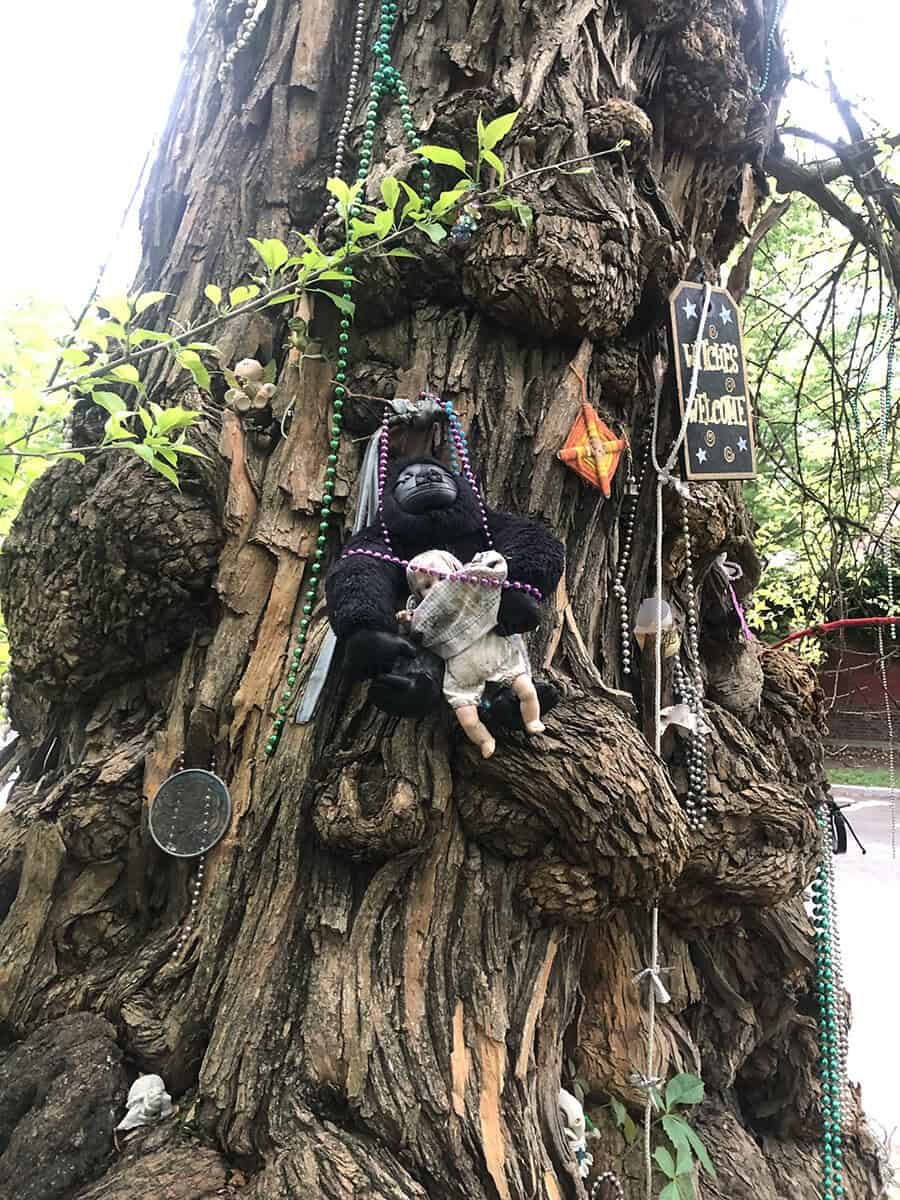
At the corner of Sixth Street and Park Avenue, opposite Central Park, stands one of Louisville’s strangest and most celebrated landmarks: the Witches’ Tree.
According to local lore, a group of witches once gathered beneath a magnificent tree at this location. When the original tree was cut down, the witches placed a curse upon the city. A devastating tornado subsequently struck Louisville in March 1890, and the legend eventually connected the storm with supernatural revenge.
The present-day tree has become the focus of a charming tradition that transforms the tree into a constantly changing display of folklore and personal expression: visitors leave trinkets such as beads, skeleton keys, and horseshoes for good fortune or a little supernatural assistance. The higher it lands in the branches, the better the luck it brings. Its gnarled trunk and colorful assortment of offerings have attracted paranormal enthusiasts and curious visitors for years.
The Witches’ Tree is also a reminder that folklore isn’t something confined to dusty books. Legends evolve, traditions develop, and new generations find their own ways to participate in the stories associated with a particular place. Today, the tree has become a beloved neighborhood landmark. If you stop by, consider leaving a small, tree-safe item as offering—and please respect the tree and the gifts left by others. After all, nobody wants to find themselves on the wrong side of an Old Louisville witch!
Follow the Witches’ Tree’s Facebook page for photographs, neighborhood news, humorous poems, blessings, and the occasional good-natured curse.
Keeping America's Most Haunted Neighborhood Alive
What began as one writer’s fascination with his supposedly haunted Victorian home has grown into a neighborhood tradition that continues to attract visitors from around the world. Over the years, residents and visitors alike have enthusiastically embraced the nickname America’s Most Haunted Neighborhood. Whether you’re drawn by the ghosts, the architecture, or simply the opportunity to explore a remarkable historic neighborhood, there’s always another story waiting around the corner.
And remember: You don’t need to believe in ghosts to enjoy a good ghost story!
Explore Louisville Historic Tours and book a walking tour and follow America’s Most Haunted Neighborhood on Facebook for more stories and updates.